Best Smart Pet Feeders 2026: Automatic & App-Controlled Options for Europe
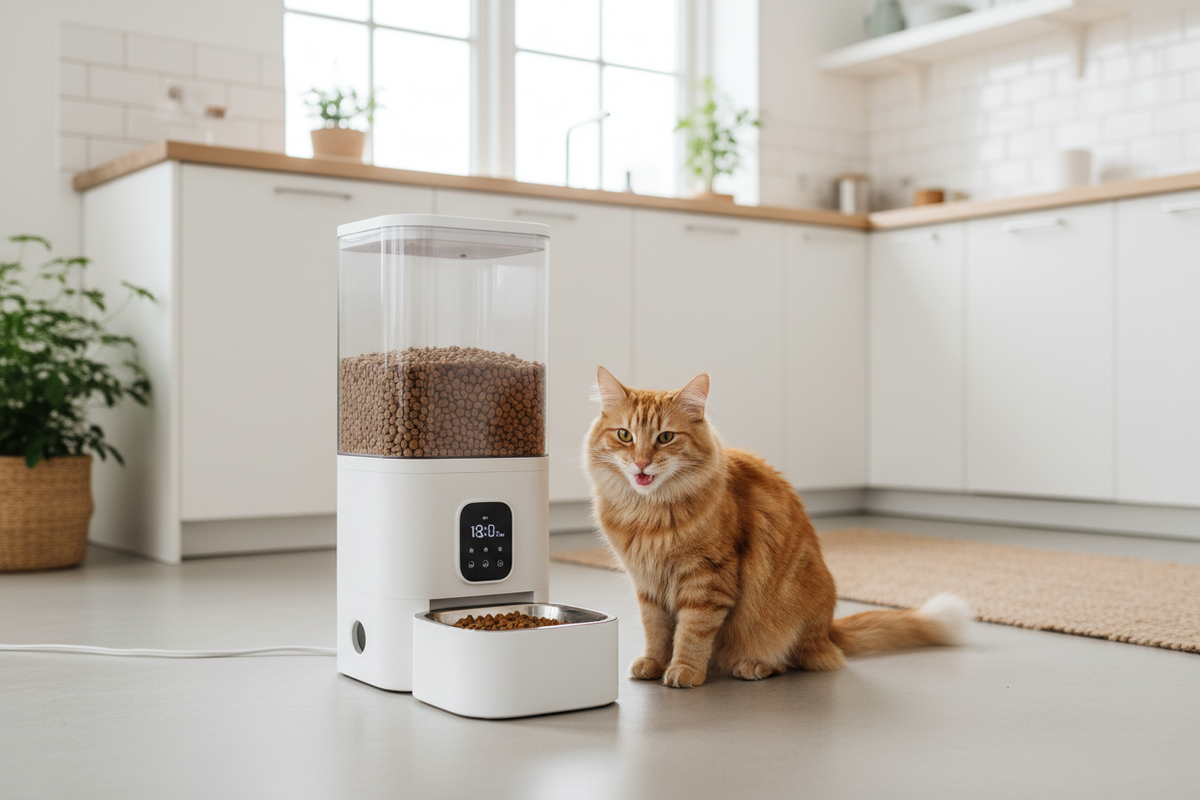
Best Smart Pet Feeders 2026: Automatic & App-Controlled Options for Europe
Keeping your pet fed on schedule — whether you're at work, travelling, or simply asleep — has never been easier than in 2026. Smart pet feeders have evolved from basic timed dispensers into sophisticated, app-controlled devices that let you schedule meals, control portion sizes, monitor food levels, and even speak to your pet via a built-in camera and speaker. For European pet owners, this guide covers everything you need to know to choose the best smart pet feeder, including EU compatibility, food safety considerations, key features, and practical buying advice.
Why Upgrade to a Smart Pet Feeder?
A traditional automatic feeder dispenses food on a timer — useful, but inflexible. A smart pet feeder gives you full control and visibility, no matter where you are:
- Remote feeding: Dispense a meal manually from your smartphone at any time — ideal when you're running late or want to give your pet a treat.
- Precise portion control: Set exact portion sizes for each meal, helping manage your pet's weight and prevent overfeeding — a common cause of obesity in cats and dogs across Europe.
- Flexible scheduling: Programme multiple meals per day at precise times, with different portion sizes for each — far more flexible than a basic timer feeder.
- Food level monitoring: Receive alerts when the hopper is running low, so you never accidentally leave your pet without food.
- Integrated camera: Watch your pet eat in real time via a built-in camera, with night vision for low-light conditions.
- Two-way audio: Speak to your pet through the feeder's speaker — a reassuring feature for pets with separation anxiety.
- Feeding logs: Track every meal dispensed, with timestamps and portion data, accessible via the companion app.
For pet owners building a connected home, a smart feeder integrates naturally alongside other smart devices. Our Smart Home Devices Guide 2026 covers the full range of intelligent devices available to European homeowners.
EU Compatibility & Food Safety Regulations
European buyers should verify several factors before purchasing a smart pet feeder:
Electrical Compatibility
Smart pet feeders are typically powered by mains adapter and/or batteries. Mains-powered models must support 220–240V AC (standard across Europe) and use the correct EU plug (Type C, E, or F — Schuko). Devices sold through authorised EU retailers will include the appropriate adapter. Battery backup is a valuable feature — it ensures your pet continues to be fed during power cuts.
CE Marking & Radio Equipment Directive
Wi-Fi and Bluetooth-enabled feeders must carry the CE mark and comply with the EU Radio Equipment Directive (RED) 2014/53/EU. Always purchase from authorised EU retailers to guarantee compliance and avoid grey-market imports that may lack CE marking.
Food Contact Materials & EU Safety Standards
Any part of the feeder that comes into contact with pet food must comply with EU Regulation (EC) No 1935/2004 on materials and articles intended to come into contact with food. Look for feeders made from BPA-free plastics, food-grade stainless steel for the bowl and internal food-contact surfaces, and food-safe silicone for seals and dispensing mechanisms. Avoid feeders with no material safety information or those designed for non-EU markets without food contact compliance statements.
GDPR & Camera Privacy
Feeders with integrated cameras stream video data to cloud servers. This data must be handled in compliance with GDPR. Look for manufacturers with EU-based data processing or clear, transparent privacy policies. Enable two-factor authentication on the companion app and use a strong, unique password for your feeder account.
Key Features to Look for in a Smart Pet Feeder
Feeder Type: Cats vs. Dogs
Smart feeders are designed for different pet types and sizes. Cat feeders typically have smaller hoppers (1–3 kg capacity) designed for dry kibble, with some models including a wet food tray with a rotating cover. Small to medium dog feeders have larger hoppers (3–6 kg) with more robust dispensing mechanisms for larger kibble. Large dog feeders offer high-capacity hoppers (6–12 kg+) for breeds that consume large portions. Premium multi-pet feeders use RFID microchip or collar tag recognition to open only for a specific pet — essential in multi-pet households where food theft is an issue.
Hopper Capacity & Meal Frequency
Consider how often you can refill the feeder and how many meals per day your pet requires. A cat eating three small meals per day from a 2 kg hopper will need refilling approximately every 2–3 weeks. A large dog eating two substantial meals per day may require a 6–8 kg hopper to last a week. Match hopper capacity to your lifestyle and travel habits.
Connectivity: Wi-Fi vs. Bluetooth
Wi-Fi feeders connect to your home network and allow remote control from anywhere via a smartphone app — the preferred option for remote feeding, monitoring, and alerts when you're away from home. Bluetooth feeders require proximity to your smartphone for control, limiting remote access. Wi-Fi has become the standard for smart feeders in 2026, and is strongly recommended for anyone who travels or works away from home regularly.
Camera & Audio Features
For feeders with integrated cameras, look for a minimum of 1080p Full HD resolution, infrared night vision for low-light feeding (common for cats that eat at night), two-way audio with a clear speaker and microphone, and a local storage option (SD card) to avoid mandatory cloud subscriptions for video storage.
Ease of Cleaning
Hygiene is critical for pet feeders. Look for models with dishwasher-safe components — particularly the food bowl, hopper, and any food-contact parts. Feeders with complex internal mechanisms that cannot be fully disassembled are harder to clean and can harbour bacteria and mould over time.
Smart Home Integration
Advanced users can integrate smart pet feeders into broader home automation routines. While most feeders use proprietary apps rather than open smart home protocols, some models offer integration with Amazon Alexa or Google Assistant for voice-activated feeding. For homes with a smart home hub, check whether the feeder's API allows third-party integration — enabling automations such as triggering a feeding when you arrive home.
A practical tip: plug your feeder into a smart plug with energy monitoring to track the feeder's power consumption and receive alerts if it unexpectedly loses power — an early warning that the feeder may have stopped working.
Smart Buying Tips for European Pet Owners
- Verify food contact material compliance: Check the product listing or manufacturer's website for explicit confirmation of BPA-free, food-grade materials and EU food contact regulation compliance before purchasing.
- Match hopper size to your lifestyle: If you travel frequently, invest in a larger hopper capacity. Consider a feeder with a low-food alert notification.
- Test with your pet's kibble: Check the manufacturer's stated compatible kibble size range against your pet's food before buying. Oversized kibble can jam dispensing mechanisms.
- Prioritise battery backup: A feeder with battery backup ensures your pet is fed even during a power outage — particularly important if you're away from home.
- Check app language support: Ensure the companion app is available in your language — Spanish, Dutch, French, German, Italian, and other EU languages are supported by most major brands.
- Consider a multi-pet RFID feeder: If you have multiple pets with different dietary needs, an RFID-enabled feeder prevents food theft and ensures each animal receives the correct diet.
- EU warranty: EU consumer law guarantees a minimum 2-year warranty. Buy from authorised EU retailers to ensure coverage.
Conclusion: Feed Smarter, Worry Less
A smart pet feeder is one of the most practical smart home investments a pet owner can make in 2026. Whether you have a cat that demands breakfast at 5am, a dog on a strict veterinary diet, or simply a busy lifestyle that makes consistent feeding times a challenge, a quality smart feeder delivers peace of mind and genuine convenience.
Prioritise EU food contact material compliance, Wi-Fi connectivity for remote access, appropriate hopper capacity for your pet's needs, and battery backup for reliability. With the right feeder in place, you can travel, work late, or simply sleep in — knowing your pet is fed on schedule, every time.
Ready to find the perfect smart feeder for your pet? Browse our full range of smart pet feeders and connected home devices at onlinestore24.eu — with fast EU-wide shipping and all prices in euros.
Meta description: Discover the best smart pet feeders for Europe in 2026. Automatic & app-controlled options for cats & dogs with EU compatibility & buying tips.